
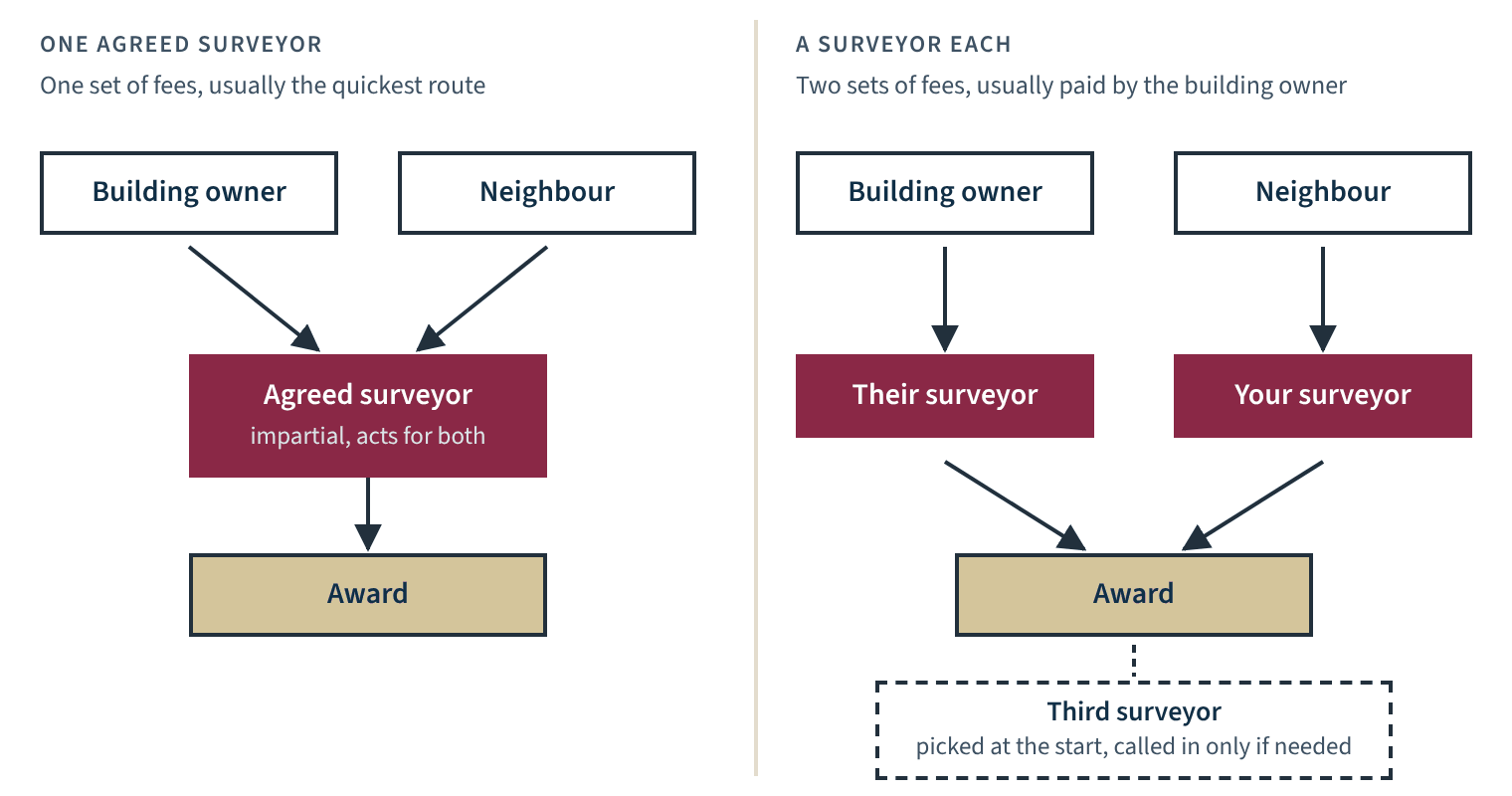
The three possible arrangements
| Arrangement | How it works | Typical cost to the building owner |
|---|---|---|
| Agreed surveyor | One surveyor acts for both owners | One set of fees |
| Two surveyors | Each owner appoints their own; together they make the award | Two sets of fees |
| Two surveyors and a third | A third surveyor is chosen at the start, called in only if needed | Usually two sets, more if the third is involved |
Why agreed surveyors work well
- One inspection, one schedule, one award
- No back-and-forth between two offices
- Lower overall fees
Why neighbours sometimes refuse
- They worry that a surveyor you suggested will favour you
- The work is high risk, such as a basement
- Relations between you are strained
Surveyors appointed under the Act are bound to be impartial, but perception matters. If your neighbour refuses, accept it gracefully; pushing tends to slow things down.
Making an agreed surveyor more likely
- Speak to the neighbour before any notice is served
- Explain that the surveyor's duty is to both owners
- Point them to the surveyor's credentials and reviews
- Offer to pay for the schedule of condition regardless
Common questions
Can my architect act as agreed surveyor?
Anyone who is not one of the owners can be appointed, but a surveyor experienced in party wall work is the safer choice, especially as the architect already acts for you.
Can the neighbour switch to their own surveyor later?
Once an agreed surveyor is properly appointed, the appointment cannot simply be withdrawn.
Where this comes from in the Act
Links go to the official text of the Party Wall etc. Act 1996 on legislation.gov.uk.